
ISA Certified Experts In Arborist Consultation Wildfire Mitigation Plant Health Care Tree Removal
Plant Health Care
Healthy Trees, Happy Yard. Your Local Family Has You Covered
Elevation and Short Growing Season Change Everything for Your Landscape
What High-Altitude Conditions Actually Do to Trees and Shrubs in Grand County
Grand County is a mountain environment where plant health care looks nothing like what works in other areas. The growing season here is compressed, UV stress is intense, and temperature swings between day and night can be dramatic even in summer. Landscape plants that thrive at lower elevations often quietly struggle here.
The Colorado River headwaters tell you a lot about local soil composition. Soils tend to be sandy, nutrient-thin, and fast-draining, which affects how high-elevation plants take up water and nutrients. If your trees or shrubs look pale or stunted, that soil chemistry is often part of the story.
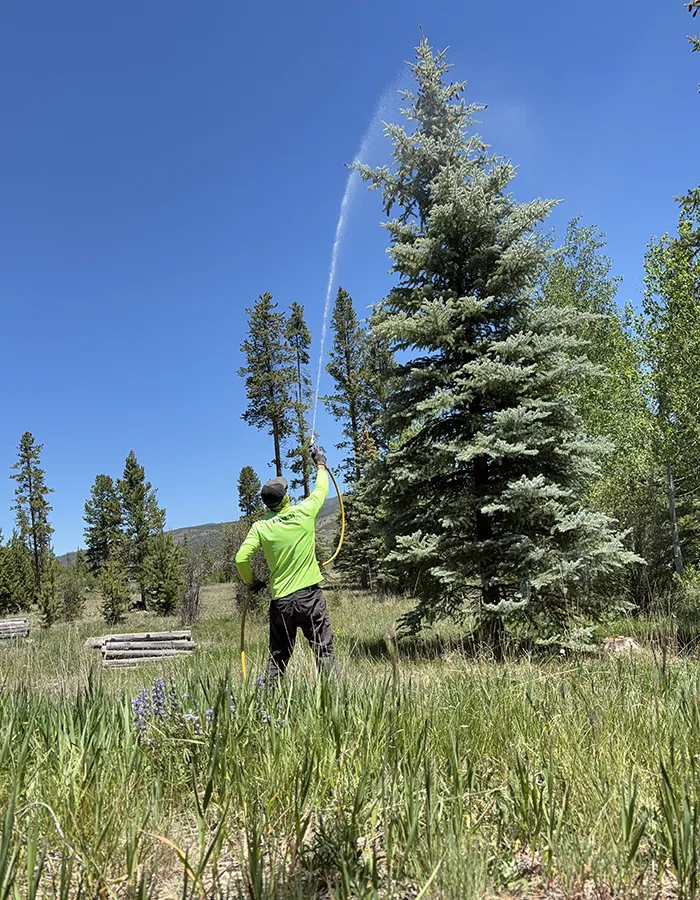
Ask Us About Plant Health Care
Watering More Doesn't Always Mean Your Trees Are Getting What They Need
Why Healthy-Looking Care Routines Can Still Leave Plants Struggling
Regular watering feels like the right move. But if your soil can’t actually deliver that water to the roots, you’re not solving anything.
Along the US Highway 40 corridor, compacted roadside soils are common. Near Lake Granby shoreline properties, sandy or mineral-heavy ground drains fast and holds almost no nutrients. In both situations, water management alone won’t fix a nutrient deficiency or get moisture deep enough to matter.
Soil testing takes the guesswork out. Once you know what your soil is actually missing, you can apply soil amendments and slow-release fertilizer where they’ll do real work. Deep root watering delivers moisture past the compacted surface layer, directly into the root zone.
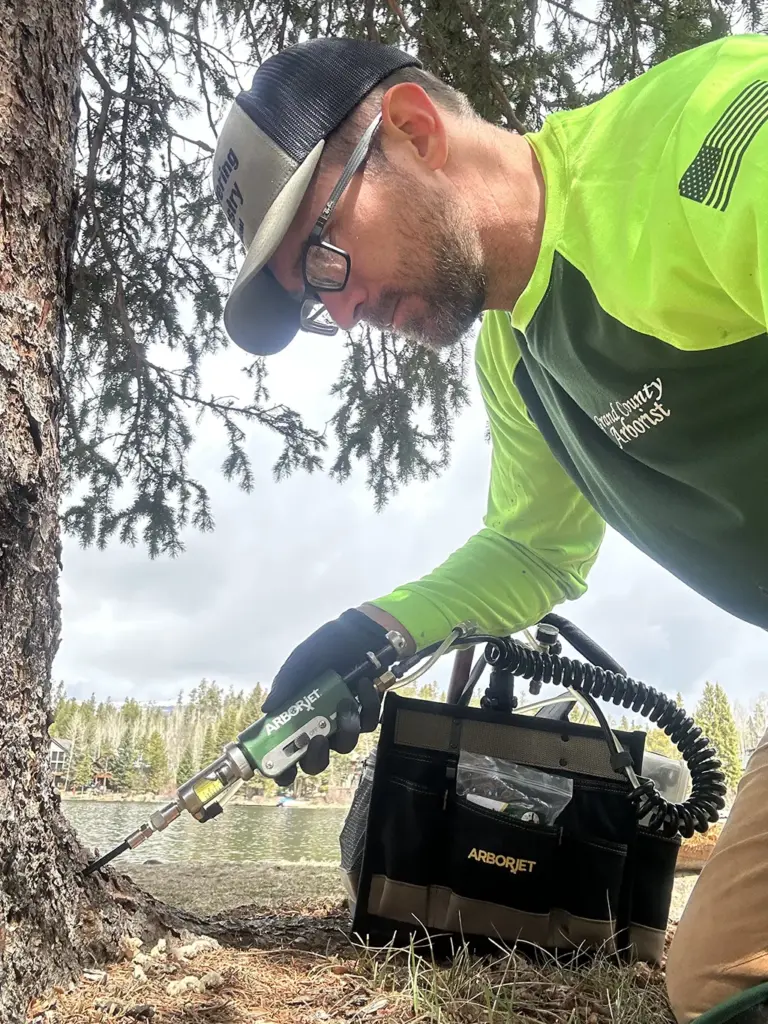
From First Look to Treatment Plan. How a Science-Based Assessment Works
ISA Certification means a plant health evaluation follows established arboricultural science, not guesswork. Every diagnosis is grounded in training that covers plant disease diagnosis, insect pest control, fungal disease treatment, and integrated pest management (IPM).
When you’re near Granby Ranch, and your aspens are losing bark or showing dieback, that kind of observation matters. A certified arborist reads the full picture: soil conditions, canopy stress, visible damage patterns, and pest pressure together.
If something looks like a fungal problem, it gets treated like one. If insect activity is involved, pest management targets the actual cause. IPM keeps treatments effective without creating new problems down the line.
You end up with a clear care plan built around what your plants actually need.
How a Family-Owned Arborist Spots Problems That a One-Time Visit Never Would
Why Ongoing Monitoring Catches What a Single Inspection Misses
Arborist Consultation
Expert diagnosis before treatment
Wildfire Mitigation
Defensible space around your home
Plant Health Care
Healthier trees, season after season
Tree Removal
Safe, efficient removals
The Longer a Plant Health Problem Goes Undiagnosed, the Fewer Options You Have
What Changes in Your Landscape When Care Gets Started Sooner
Beetle kill and fungal disease don’t announce themselves. By the time you notice visible decline in a tree or shrub, the problem has usually been developing for one or two growing cycles already. That delay shrinks your options.
If you’re near Lake Granby and a stress pattern has been quietly building through your landscape, early plant health care keeps more trees in the ground. Preventive care and IPM can interrupt invasive insects and bacterial disease before they spread to neighboring plants. Waiting to see if things improve on their own rarely works at elevation.
If a tree can still be treated, you keep your landscape investment. If it can’t, removal is the only path left. Starting sooner almost always means more choices.
Reach out when something looks off. That’s the right time.