
ISA Certified Experts In Arborist Consultation Wildfire Mitigation Plant Health Care Tree Removal
Tree Removal
Safe Tree Removal Done Right By Granby's Favorite Family Team
Rocky Soils and Heavy Snowpack Make Tree Removal Harder Than You Think
Why Elevation and Soil Conditions Change Everything About How a Tree Falls
Our properties sit high up in the mountains, where thin, rocky soils and annual snowpack stress tree root systems in ways you won’t find at lower elevations. Tree Removal isn’t just about cutting a tree down – it’s about understanding how that tree is anchored before anyone makes a cut.
Rocky substrate limits how deep roots can grow, which means a tree that looks solid can have a shallow, compromised base. Add heavy snow loading through a long winter, and you get root systems that are already stressed before any hazardous tree removal work begins. That changes the fall zone calculation and the rigging approach entirely.
If your property sits along the Lake Granby shoreline, the terrain adds another layer. Sloped ground near the water, combined with soft soil from snowmelt, makes high-risk tree removal significantly more technical than a straightforward backyard job.
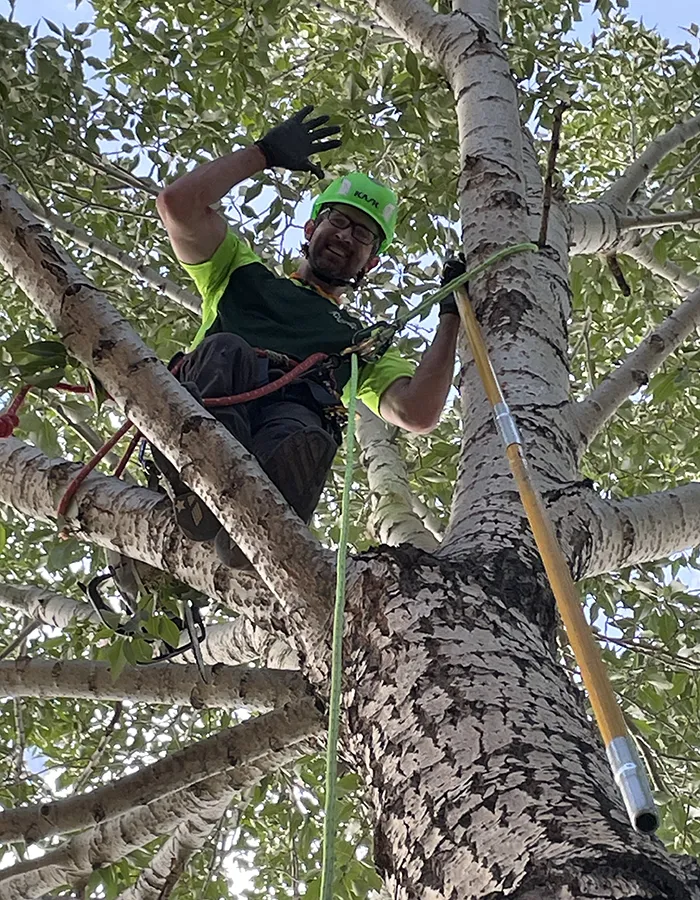
Ask Us About Tree Removal
Most People Don't Realize a Sick Tree Can Still Look Fine From the Street
How to Tell Whether Your Tree Needs Removal or Just Some Attention
A tree with full leaves and an upright trunk looks healthy. That assumption gets a lot of people in trouble.
Internal decay, compromised root systems, and early mountain pine beetle damage often don’t show up on the outside until a tree is already structurally unsafe. Out on the rural parcels along Grand County Road 40, beetle-killed trees are a real and common problem. The telltale pitch tubes and fading needles can be easy to miss if you’re not looking for them.
If you’re not sure whether your tree is declining or just having a rough stretch, that’s exactly what a tree health assessment is for. A certified arborist can read the signs that aren’t visible from your driveway and give you a straight answer about tree health before you spend money guessing.
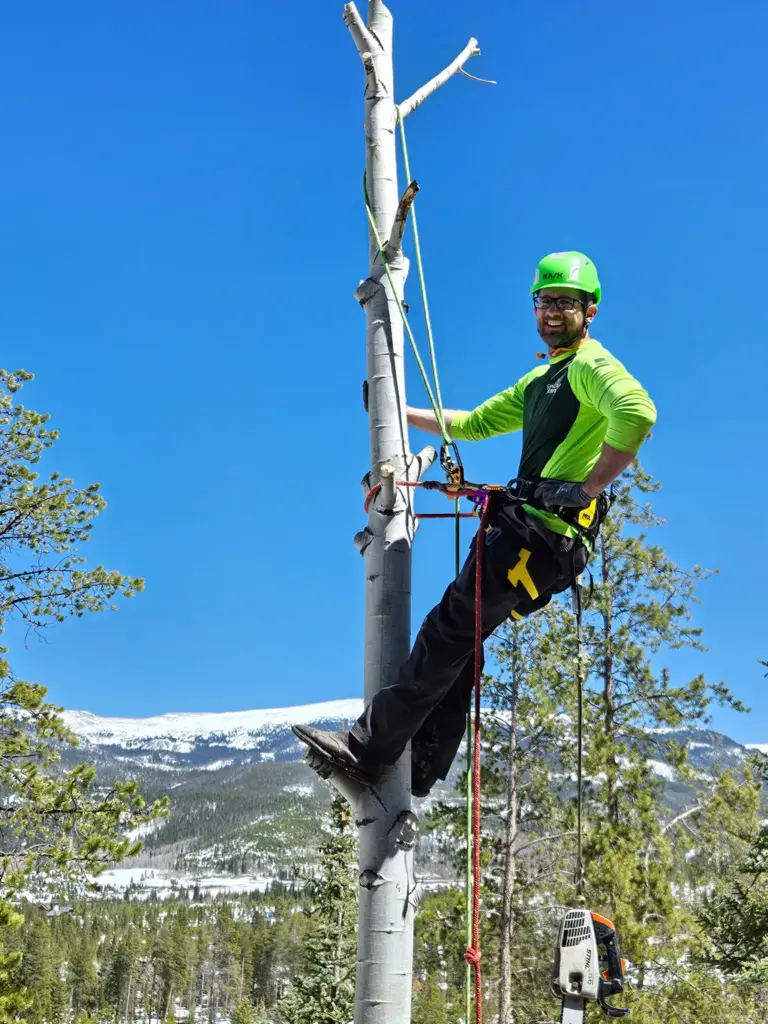
The Difference That a Certified Arborist Brings
ISA certification isn’t just a credential on a business card. It means the person assessing your tree has completed verified training in tree risk assessment, structural analysis, and removal planning around structures. When a dead pine is leaning over your roofline, that training changes how the job gets planned and executed.
A licensed arborist evaluates which direction a tree will actually fall given its lean, root condition, and surrounding obstacles. A general tree cutter often just works with what’s visually obvious. If your tree is close to a fence, vehicle, or the corner of your house, that difference matters a lot.
If you’re on a densely wooded lot, a certified assessment also covers fuels reduction and defensible space planning. Wildfire mitigation isn’t just about cutting the obvious hazards. It’s about understanding which trees increase your fire risk and which ones actually serve as a buffer. A certified arborist can walk your property and give you a clear picture before any residential tree removal happens.
The Longer a Problem Tree Sits, the More It Affects the Trees Around It
What Changes on Your Property When a Hazardous or Diseased Tree Goes Unaddressed
Mountain pine beetle doesn’t stay in one tree. Once a beetle-killed tree is left standing, nearby healthy trees become the next target. That’s a real pattern along the US Highway 40 corridor, where properties sit close together, and a single infested tree can quietly start a chain reaction through a yard before anyone notices.
Delayed removal also changes the job itself. A tree that’s been dead for a couple of years develops brittle wood and unpredictable break points, which makes storm damage cleanup more involved than a straightforward removal would have been. If you’ve been watching a tree and telling yourself you’ll deal with it later, the tree is changing in ways that complicate that decision.
Beyond the tree itself, a compromised root system affects soil stability over time. Roots hold surrounding soil in place, and when they decay, nearby ground shifts. That matters for fencing, slopes, and any tree preservation work you want to do for the healthy trees left on your lot.
Arborist Consultation
Expert diagnosis before treatment
Wildfire Mitigation
Defensible space around your home
Plant Health Care
Healthier trees, season after season
Tree Removal
Safe, efficient removals
Here's What Happens From Your First Call to the Final Cleanup
A Simple Look at How Grand County Arborist Handles a Tree Removal Job
Scheduling a site visit is where everything starts. We come out, walk the property with you, and assess exactly what the job involves before any work begins. You get a clear picture of the scope, the approach, and what cleanup looks like afterward.
Removal day follows a straightforward sequence. The tree comes down in sections or as a whole depending on what’s around it. Debris gets fed through the chipper on site, and anything too large for chipping gets hauled off. If you want stump grinding or full stump removal, that happens the same day in most cases.
If you’re a vacation property owner and you can’t be there in person, that’s not a problem. Being family-owned means you’re dealing with the same person from the first call through final lot clearing. There’s no handoff to a crew you’ve never spoken with.
What Happens to the Wood
Wood For The Community
We don’t haul your tree to a landfill. When a removal produces usable logs, we bring them to nearby neighbors and community members who heat their homes with wood, free of charge. Winters are long here, and a cord of firewood goes a long way for a family that needs it.
If you’d like to keep the wood yourself, just say the word, and we’ll cut it to length and stack it on your property instead.